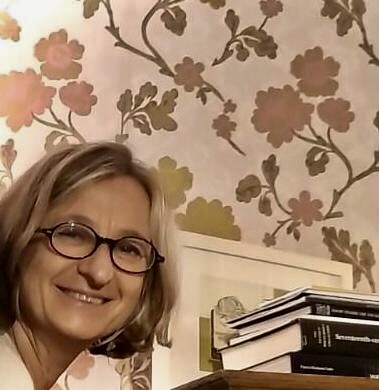
Rossana BARCELLONA

Associate Professor of History of Christianity and of Churches [HIST-04/B]

Keywords

My main areas of research focus on the religious, social and institutional history of the Christian West in late antiquity, and in particular the historical and political context of Gaul between the 4th and 6th centuries. Particular attention has been paid to Faustus of Riez, an emblematic figure: for understanding the historical and cultural transformations that took place at the end of the 5th century; for identifying certain patterns of interaction between ecclesiastical structures, monastic circles and power dynamics; and for gauging the nature of relations between decentralised ecclesiastical sees and between these and the Roman See.

 A significant portion of the research has focused on and continues to focus on the conciliar output of Gaul, examined as a source for understanding the links between religious institutions and society, based on two hypotheses that have been positively verified: a) law and religion constitute the very nerve centres of society, often indistinguishably so; for this reason, the canons – read through comparison with civil legislation and Christian literature – are a privileged source for studying these centuries: b) Gaul serves as a case study, as a social microcosm within the broader debate on the Christiana societas. Within this framework, a number of specific issues come to the fore: the interconnection between cultural and religious transformations; socio-economic and institutional dynamics in the transition from antiquity to the new social organisation of the future Europe; conflicts between powers and management strategies; clashes/encounters between religious systems (Jewish, pagan and Christian); asymmetrical relationships between women and the clergy (sexuality, continence and celibacy); changes in family structures (marriage; motherhood; childhood; infanticide); issues of economic ethics (usury; territorial boundaries); relationships between religious and political powers in the Roman-Barbarian kingdoms. This field encompasses various publications, including the 2010 translation of the 5th-century Gallic Councils (the first in a modern language).

Hagiographic literature occupies a significant place within the field of study, attracting attention both from a primarily literary perspective and from a historical one, as hagiographic texts sometimes become irreplaceable sources for the study of regions with scarce sources and those considered peripheral in historiography (such as Sicily), or for reconstructing the lives of sections of humanity whose contribution to history has been minimal, and for a long time only marginally recognised (such as that of women). Such texts often provide useful gateways to the historical truth regarding the saintly protagonists or the concrete reality of the era in which their respective stories are set, but they are often more effective for the insights they offer into the historical and cultural milieu of the authors and their intended audience; for the answers they can provide to those investigating strategies of communication and power; regarding implicit or unintended content; and regarding the purpose for which biographies and collections of miracles were produced, at the time they were produced. The more specific areas of interest are: hagiographic sources for the history of early Christianity in Sicily (the legend of Saint Placidus; hagiographic sources between history and historiography); the relationship between Lerins hagiography and Gallic (Gregory of Tours) and Italic (Gregory the Great) works; and female asceticism (Radegund).

Another strand concerns the ‘conversion’ of culture. The research undertaken aims to verify and demonstrate how shifts in tastes and mentalities are shaped by changes in religion, and particularly by the transformations brought about by Western Christianity. This context encompasses reflection on the Christian reception of classical erotic literature, which is useful for understanding the major transformations of late antiquity, but also for gaining a greater awareness of the ways in which that legacy has been channelled into the production of emerging European literatures (Sidonius Apollinaris; Salvian of Marseille; Venantius Fortunatus).

The trajectory of this research is shaped and sustained by the ongoing tension arising from the observation of the present and the extent to which religious themes impact contemporary society. This tension gives rise to a focus on: a) the presence of religious themes in film, the visual arts and the performing arts (with the aim of analysing how the various arts position themselves within the contemporary debate on Christianity and religions); b) on European cultural policies in relation to the theme of religious literacy as an essential element of school education and citizenship education; c) on the interconnections between devotions, cults and society (with a focus on the implications of rituals, political powers and illegal powers).

Finally, over the last fifteen years, I have begun to study certain ‘apocryphal infancy gospels’, coinciding with a growing interest – spurred in part by the research project in which I took part – in ‘ancient childhoods’, a field of study that remained marginal for a long time but is now experiencing significant expansion. This literature, with its complex and uncertain traditions, is being investigated: a) to gather data useful for reconstructing profiles of lost childhoods; b) to ascertain how it has helped to convey content destined to become traditional and enduring, to the point of remaining embedded in contemporary culture and still active; c) as an integral part of intricate cultural and relational networks that bridge East and West, to the extent that they can be used as indicators and tools for tracing routes and exchanges between peoples.


I am an Associate Professor of History of Christianity and the Churches in the Department of Humanities at the University of Catania; Chair of the LM38 degree program (Master’s Degree in Languages for International Cooperation); and Editor (with Teresa Sardella) of the “Armarium” series (RUBBETTINO). I am a member of the editorial boards of several academic journals and series. I am actively involved in various national and international associations (MedioEva; Sapienza Center for the Study of thernational and national conferences at Italian and foreign universities. I have given lectures for courses at the University of the Third Age on topics at the intersection of the history of Christianity, the history of religions, and local history. Mediterranean and Near East in Late Antiquity and the Early Middle Ages; European Fairy Tale Route). I have been teaching at the University of Catania since the 2000–2001 academic year and have also taught at its Syracuse and Ragusa campuses. I have taught courses for first- and second-level master’s programs and for interdepartmental modules (UNICT). I have taught abroad (University of Cantabria), where I led training seminars for doctoral students. I have participated as a speaker in numerous international and national conferences at Italian and foreign universities. I have given lectures for courses at the University of the Third Age on topics at the intersection of the history of Christianity, the history of religions, and local history.


Recent Monographs:

L’eredità di una regina. Radegonda e lo scandalo di Poitiers (589-590), Rubbettino 2020.

- Donne in scena. Poteri, saperi, religioni, Lentini (SR), Duetredue Edizioni, 2022 (con un saggio di M. Poma).

- Nascite, infanzie e altri miracoli. Letture apocrife tra Oriente e Occidente. Armarium 19, Rubbettino 2023.

Rossana Barcellona is an associate professor of History of Christianity and the Churches (S.S.D. HIST-04/B) (appointed to the position of full professor effective October 2026).

From 2001/02 to 2002/03 and 2002/04, she served on the Curriculum Committee, overseeing the transition from the old system (pre-509) to the new system (3+2), as well as the review and evaluation of curricula.

From 2013 to 2025, she served as the Director’s Delegate for the coordination, evaluation, and accreditation of AAF programs.

From 2018 to 2024, she was a member of the Executive Committee of the CUSCC (University Council for the History of Christianity and the Churches).

Since 2020 (to the present), she has been a member of the DISUM Executive Committee.

Since 2023 (to the present), she has served as the Director’s Delegate for the coordination of the “Gender and Cultural Studies” research line.

Since 2023 (to the present), she has been Coordinator of the LM 38 (Master’s Program in Languages for International Cooperation).

She has been teaching at the University of Catania since the 2000/2001 academic year (she has also taught courses at the Syracuse and Ragusa campuses).

She has taught on first- and second-cycle Master’s programmes (UNICT).

She has taught abroad (University of Cantabria), where she was also invited to deliver training seminars for PhD students.

She has proposed and coordinated numerous teaching seminars within the department (as part of activities eligible for AAF accreditation).

She has delivered seminars for the inter-departmental JEAN MONNET module: New Skills for New Challenges (UNICT).

Since April 2022 (to the present), she has been a tutor to Andrea Romano, a student at the high school in Catania, where (in collaboration with Arianna Rotondo) she has coordinated a specialist course (academic year 2022/23) on Religioni Cristianesimi Paganesimi. Strumenti e metodi per percorsi diacronici.  

PhD

She was a member of the Board of the PhD Programme (based in Messina) in Historical, Archaeological and Philological Sciences from the 2003/04 academic year until the 2020/2021 academic year.

She is a member of the Academic Board of the PhD programme in Interpretation Studies at the University of Catania, from the 2021-2022 academic year (to the present).

During the three-year period 2021-2024, she supervised the doctoral thesis of Dr Antonio Mursia, Reading, Interpreting, Understanding: Norman-era parchments from the monastic collections of the University of Catania, as part of the PhD Programme in Interpretation Sciences – Cohort: XXXVII.

She has acted as an external examiner for several doctoral theses (both national and international).

Editorial Boards of Journals and Series

- Editorial Secretary of the academic journal “Cassiodorus” (from its founding and throughout its publication: 1995–2001).

- Member of the editorial board of the journal ‘Peloro’, the journal of the PhD programme in Humanities (DICAM – University of Messina) until 2020.

- Editor (with Teresa Sardella) of the series ‘Armarium’ (Rubbettino/Soveria Mannelli) https://www.store.rubbettinoeditore.it/collana/armarium/ to date

- Member of the scientific committee of ‘Studi e Materiali di Storia delle Religioni-SMSR’, Class A journal – Area 11

- Member of the scientific committee of ‘Studia Philologica Valentina’, Class A journal – Area 10 (Department of Classical Philology, University of Valencia) https://www.uv.es/sphv/ 

- Member of the scientific committee: ‘Nuovi Testi Patristici’ series (Città Nuova-Rome) https://www.goodbook.it/citta-nuova/libri-collana-nuovi-testi-patristici-115787.html

- Member of the scientific committee: ἰερὰ 2 Series of historical-religious studies edited by Mariangela Monaca (CITTÀ DEL SOLE ED. Reggio Calabria-Messina-Bolzano).

She is also:

-  Member of GENUS Interdisciplinary Research Centre for Gender Studies (Department of Humanities – University of Catania) http://www.genus.unict.it

-    Member of the Executive Committee of the Italian Association for the Study of the Sanctity of Cults and Hagiography (AISSCA). 

-    Associate member of: Sapienza Centre for the Study of the Mediterranean and Near East in Late Antiquity and Early Middle Ages (‘La Sapienza’ University of Rome). http://centreforlateantiquity.saras.uniroma1.it/

-    Member of: MedioEva (international inter-university centre for the study of women’s literature and women in medieval literature). https://medioeva.unisi.it/

-  Member of the scientific committee of: ‘Laboratory of Cultural and Religious History: The Mondays of the Arians’ (Department of Cultural Heritage, University of Bologna: https://site.unibo.it/laboratorio-lunedi-ariani/it) (

-   Member of the International Scientific Committee of the European Fairy Tale Route Association.  European cultural route recognised by the Council of Europe www.europeanfairytaleroute.eu


Research Projects

She has taken part in numerous national and international research projects. Below is a selection of the most recent ones:

- Principal Investigator of the University project (“Prometeo Linea 3” MAPPE): Mediazione e Alterità: Parole 'Primordiali' per Comunicare in Europa. Tradizioni culturali e Retaggio classico per la Costruzione di un’Identità Europea Contemporanea. 2017–2019.

- Member of the University project: Rethinking East-West Imaginaries. Language, Body, Mind (ATLAS), University Research Incentive Plan; Principal Investigator Francesca Vigo. 2020–2022.

- Member of the project From Reading to Writing (DALLAS), University Research Incentive Plan; Principal Investigator: Renata Gambino. 2024–2026.

- Member of PRIN: Godscapes: Modelling Second Millennium BCE Polytheisms in the Eastern Mediterranean, Principal Investigator Nicola Laneri (protocol 20204N3WCX)

- Member of the research project: Seditio in urbe. Disensión religiosa y orden social en la Antigüedad Tardía (ss. IV-VI d.C.); Principal Investigator M. Marcos Sánchez-J. Torres Prieto). (PID2019-106423GB-I00/ AEI / 10.13039/501100011033). University of Cantabria, Department of Historical Sciences, Santander. 2020–2024.

- Member of the research project: Eroiche fanciulle, sante bambine, cattive ragazze. Un approccio transdisciplinare e diacronico alla costruzione dell'identità femminile ed alla sua rappresentazione, protocol: RM12117A66E6128F, Principal Investigator Elena Zocca (Sapienza-Rome).

Conference participation and organisation

She has attended around 150 conferences (national and international)

She has organised conferences, seminars and workshops (national and international)

Publications

She has published seven monographs and over one hundred articles in journals, conference proceedings and miscellaneous publications (go to the dedicated page).


Erasmus Agreements with:

Universidad de Cantabria-Santander, code 2060 (0232/Literature and Linguistics – Bachelor’s degree) until 2027/28;

Universidad de Valencia, code 2028 (0232/Literature and Linguistics – Bachelor’s degree) until 2027/28;

Universitat de Barcelona, code 3260 (0222/History and Archaeology) until 2028/29.


Third Mission

- 24 February 2016: planning, coordination and promotion of the play “Ipazia di Alessandria” (a monologue written by Mariapina Settineri, performed by Margherita Patti), at the Machiavelli Theatre (UNICT)

- 22 May 2018: programming, coordination and promotion of the play o Moi qui marce (directed by Jean Paul Denizon, visible puppeteers: Melita Poma, Arnaud Caron, Jean-Paul Denizon; Puppets: Mélanie Mazoyer), at the Machiavelli Theatre (UNICT) managed by the Ingresso Libero Social Promotion Association.

- November–December 2019: organisation and coordination of the refresher course for secondary school teachers, entitled: Declinazioni della violenza (SOFIA platform COD ID 37121), aimed at fostering reflection and debate on the historical implications of the relationship between violence and religions.

- 8 and 9 November 2019: planning, coordination and promotion of the play “Una tavolozza rosso sangue” (directed by Jean Paul Denizon, starring Melita Poma and Margherita Patti), at the Machiavelli Theatre (owned by UNICT) managed by the Ingresso Libero Social Promotion Association.

- From January 2019 until the conclusion of the agreement, contact person for the University of Catania: Collaboration Agreement with the Ingresso Libero Social Promotion Association and the Puggelli Foundation (Ref. No. 1496 – UNICT Department of Institutional Relations with the Local Area).

- From 2019 to 2026: coordination of an interdepartmental seminar on: “Territorio Ambiente e Mafia - Giambattista Scidà”, in collaboration with the following associations: ANPI (National Association of Italian Partisans) Catania and Palermo; Libera; Memoria e Futuro; ARCI-Catania; “Siciliani giovani”; Anti-Mafia Association “Rita Atria”; UDI (for the dissemination of content and the promotion of related initiatives outside the University).

- 24 November 2023: participation in the round table on: The violence of war and patriarchy, with a presentation entitled: What ‘kind’ of war?, at Palazzo Citelli (CT) in collaboration with Centro Genus; the feminist collective RivoltaPagina; Non Una Di Meno.

- 4 December 2024: Round table on ‘Gender, Utopias and Heterotopias: Between Research, Education and Society’, at the Sala dell’Esedra (CT) with the following associations: Thamaia Anti-Violence Centre; Unione Donne in Italia; Città Felice; La ragnatela; CGIL Women (with questionnaires administered to university students and representatives of the associations).

VIEW THE PUBLICATIONS
N.B. the number of publications can affect the loading time of the information
VIEW COURSES FROM A.Y. 2022/2023 TO PRESENT

Research Projects. Below is a selection of the most recent ones:

- Principal Investigator of the University project (“Prometeo Linea 3” MAPPE): Mediazione e Alterità: Parole 'Primordiali' per Comunicare in Europa. Tradizioni culturali e Retaggio classico per la Costruzione di un’Identità Europea Contemporanea. 2017–2019.

- Member of the University project: Rethinking East-West Imaginaries. Language, Body, Mind (ATLAS), University Research Incentive Plan; Principal Investigator Francesca Vigo. 2020–2022.

- Member of the project From Reading to Writing (DALLAS), University Research Incentive Plan; Principal Investigator: Renata Gambino. 2024–2026.

- Member of PRIN: Godscapes: Modelling Second Millennium BCE Polytheisms in the Eastern Mediterranean, Principal Investigator Nicola Laneri (protocol 20204N3WCX)

- Member of the research project: Seditio in urbe. Disensión religiosa y orden social en la Antigüedad Tardía (ss. IV-VI d.C.); Principal Investigator M. Marcos Sánchez-J. Torres Prieto). (PID2019-106423GB-I00/ AEI / 10.13039/501100011033). University of Cantabria, Department of Historical Sciences, Santander. 2020–2024.

- Member of the research project: Eroiche fanciulle, sante bambine, cattive ragazze. Un approccio transdisciplinare e diacronico alla costruzione dell'identità femminile ed alla sua rappresentazione, protocol: RM12117A66E6128F, Principal Investigator Elena Zocca (Sapienza-Rome).