
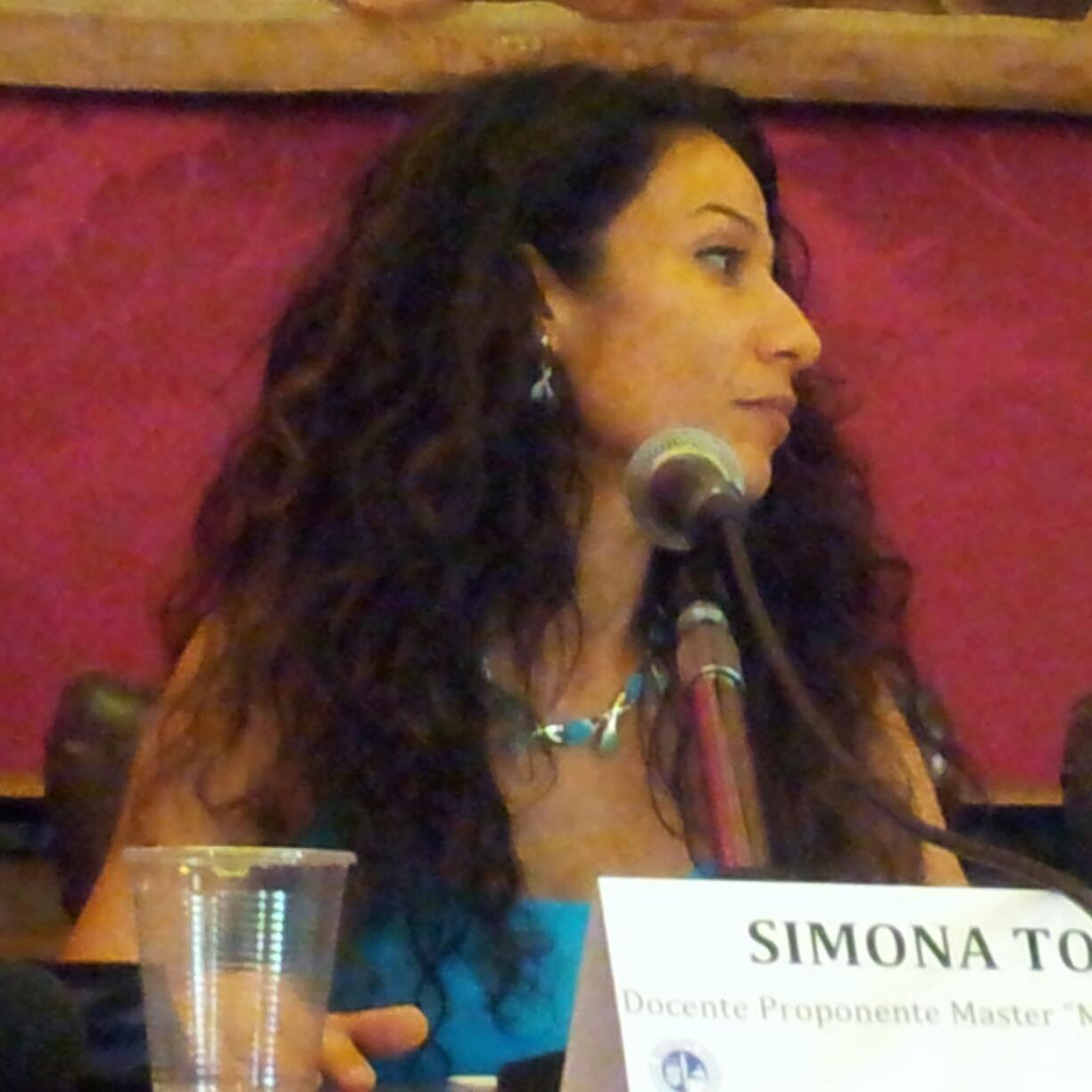
Simona Venera TODARO
I have been a faculty member in archaeology since 2008, first as a researcher and since 2022 as an associate professor. I teach courses on the Prehistory of the Aegean and Cyprus, the Prehistory of the Mediterranean up to the beginning of the 2nd millennium BC, and Theory and Practices for Experimental Archaeology at the University of Catania. Since 2023, I have been President of the Degree Course in Archaeology, Director of the Interdepartmental Research Center for Cretan Studies (CEARC), and Scientific Director of the Archaeology Museum of the University of Catania (MUAC).
My specific interests concern the Aegean and especially Crete between the 6th and 3rd millennium BC, with a particular focus on Crete, prehistoric Sicily, and public archaeology.
I am mainly active in the field in Greece, particularly in Crete, where I coordinate a research unit operating at Phaistos. I am responsible for the study of Neolithic materials from Gortyna (acropolis and Kannia), Stironas, and Knossos (Greek excavations). In Sicily, I have co-directed excavations at Valcorrente and in Catania, in collaboration with the Soprintendenza of Catania and the Archaeological and Landscape Park of Catania and the Valley of Aci.
I have directed or co-directed national and international scientific projects, focused not only on material culture but also on climatic and environmental reconstruction.
The research activity develops along five main axes: (1) the development of complex societies in the central-eastern Mediterranean, with particular reference to the rise of the Cretan palaces around the end of the 3rd millennium BC; (2) mobility, connectivity, and cultural interaction in the central-eastern Mediterranean, with special attention to the period between the end of the 6th and the end of the 3rd millennium BC; (3) craft traditions, technology, and cultural identity, with particular reference to ceramic production in Crete and Sicily between the end of the 6th and the beginning of the 2nd millennium BC; (4) relative and absolute chronology between the end of the 6th and the end of the 3rd millennium BC; (5) paleo-environmental reconstruction of the southwestern coast of Crete. Among the topics addressed with greater systematicity are those related to the construction of social and cultural identity, the political economy of communities from the Early Bronze Age in Crete, and social and ritual practices (in domestic, productive, and funerary contexts), also treated transversally across the various axes, as well as those related to the paleo-environmental reconstruction of the territory that saw the birth and development of the centers of Phaistos and Haghia Triada. The applied methodologies mostly relate to the study of material culture, approached holistically and contextually (chaine operatoire approach; contextual approach), integrating macroscopic and microscopic analyses of archaeological artifacts with analysis of their production and use contexts; settlement strategies in a diachronic perspective on both local and regional scales (stratigraphic excavations and regional surveys); network analysis on regional and interregional levels (exchange of products and know-how); environmental reconstruction (landscape archaeology), through the integration of archaeological, geological, faunal, and palynological data; experimental archaeology, as a heuristic tool that is part of the knowledge process, through the verification of technological properties of potential tools and specific operational sequences. At the basis of everything lies extensive preparatory work on the definition of a relative chronology for the 5th, 4th, and 3rd millennia BC which, by integrating stratigraphy and seriation, has made it possible to refine temporal resolution and to interpret the changes in south-central Crete in relation to specific phases of occupation of Phaistos, the main center of the area. Given the need to integrate a large amount of data acquired with different methodologies over more than 120 years of research activity, the issue of legacy data has recently also been addressed.