
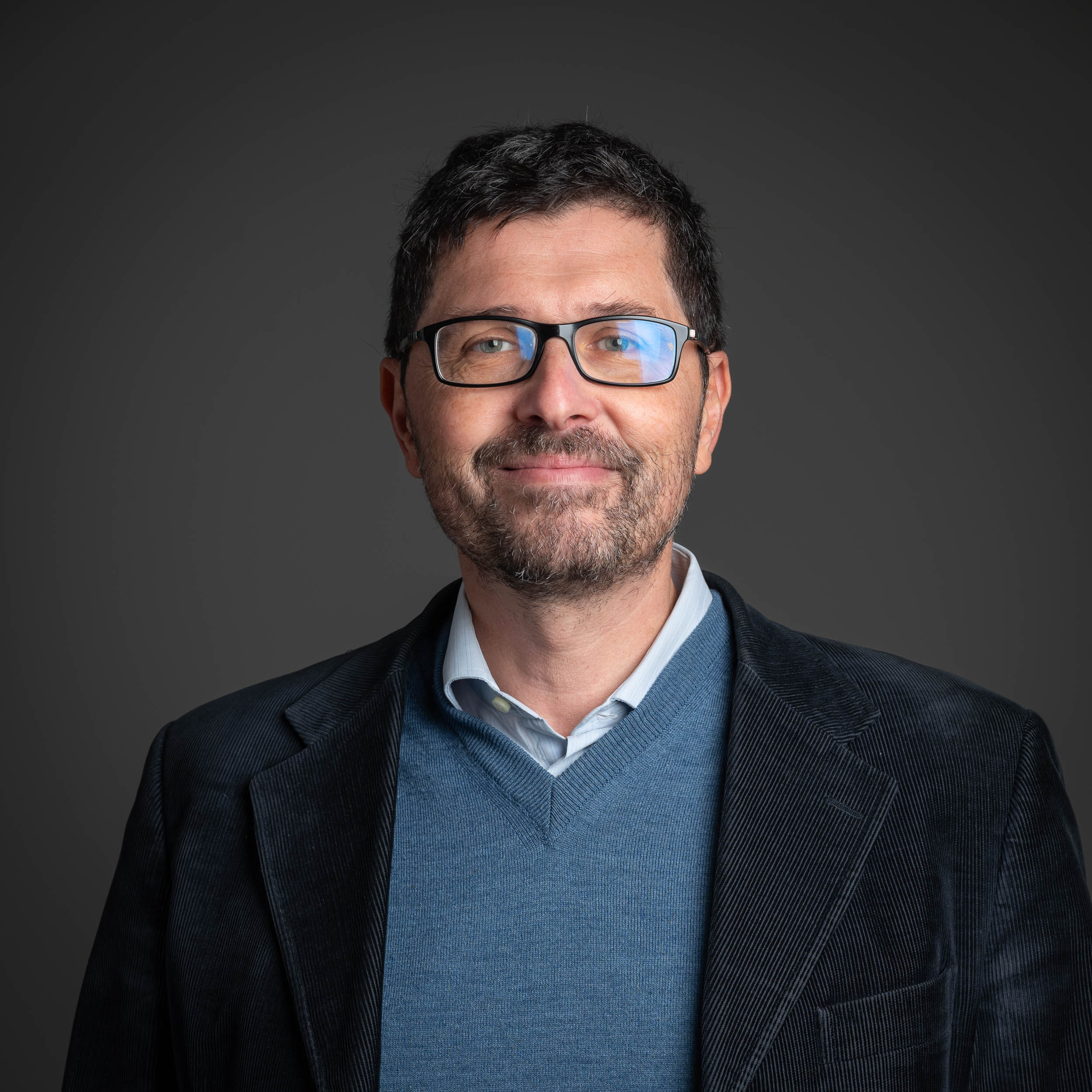
Andrea TARTAGLIA
He graduated with honors in Architecture (1996), earned a Master of Arts in "Health Buildings: Planning, Management, and Design" from London South Bank University (1998), and earned a PhD in "Technical Innovation and Design in Architecture" (15th cycle).
He conducts training, research, consulting, and design activities within complex scenarios with reference to the technological field and its socio-environmental, procedural, and regulatory interrelations. In particular, he has focused on the theme of innovation at three levels: regulatory and procedural, process and product qualification, and environmental sustainability. His work has always focused on innovative process and territorial control tools, which constantly draw on technological design, integrated, multidisciplinary, and multi-scale design, product qualification, and socio-economic sustainability. His diverse research has also been validated through project proposals submitted for implementation and design competitions, as well as through technical support for policy decisions by public administrations and institutions.
From 2020 to 2026, he was a member of the Board of Directors of the Italian Society of Architectural Technology - SITdA.
Since 2026, he has been a member of the Doctoral School in Sciences for Heritage and Cultural Production (DISUM - UNICT).
BIOGRAPHICAL NOTES
Andrea Tartaglia, born in Novara (Italy) on October 6, 1972.
December 1996. Degree with honors in Architecture, Faculty of Architecture, Politecnico di Milano.
October 1998. Master of Arts in Health Buildings: Planning, Management, and Design, London South Bank University, London (UK).
June 2004. PhD in "Technical Innovation and Design in Architecture," 15th cycle, Politecnico di Milano..
2004-2006. Research Fellow at the Department of Building Environment Science and Technology, Politecnico di Milano..
2007-2015. Tenured Assistant Professor in Architectural Technology (ICAR12) at the Department of Built Environment Science and Technology - BEST (now Architecture, Construction Engineering, Built Environment - ABC) at Politecnico di Milano.
Since 2015. Associate Professor of Architectural Technology (ICAR 12) at the Department of Built Environment Sciences and Technologies - BEST (now Architecture, Construction Engineering, Built Environment - ABC) at the Politecnico di Milano..
2018. Obtained the National Scientific Qualification for the role of Full Professor for the competitive sector 08/C1 - DESIGN AND TECHNOLOGICAL DESIGN OF ARCHITECTURE.
Since 2025. Full Professor of Technological and Environmental Design (CEAR 08/C1) at DISUM at the Università di Catania.
DIDACTIC ROLES AND ACTIVITIES
2016-2025. Vice-coordinator of the Master's Degree in Architecture (since 2017, Master's Degree in Architecture, Built Environment, Interiors), AUIC School - Politecnico di Milano.
2016-2021. Head of Quality Assurance for the Master's Degree in Architecture (since 2017, Master's Degree in Architecture, Built Environment, Interiors), AUIC School - Politecnico di Milano.
2019-2025. Member of the Doctoral Committee in "Architecture, Built Environment, and Construction Engineering," Politecnico di Milano.
2009-2015. Member of the Doctoral Committee in "Design and Technologies for Cultural Heritage," Politecnico di Milano.
2007-2011. Member of the Doctoral Committee in "Design and Technologies for Cultural Heritage Enhancement," Politecnico di Milano.
Since 2026. Member of the Doctoral Committee in "Sciences for Cultural Heritage and Production", DISUM - UNICT.
Within the Technological Design of Architecture and Environmental Design area of interest, research and design activities are geared toward investigating the relationship between the ENVIRONMENT - HEALTH/WELL-BEING - REGULATIONS triad at various scales and through governance, programming, design processes, and products.
Thus, consistent with the scientific approach of the Technological Design for Architecture and the Environment (Environmental Technological Design), research focuses on three main aspects:
a) The relationship between project quality and innovation, process management, and regulatory, social, and economic aspects in public works. The evolving operational landscape of interventions—increasingly characterized by high technical and procedural complexity, changing regulatory frameworks, and rapid innovation in technologies and systems—requires the improvement and updating of planning and design methods, models, and tools. In this regard, community service projects (healthcare facilities, educational facilities, collective housing) are one of the most significant paradigms and are analyzed through: Research Projects of National Interest (PRIN); research funded by public institutions; and feasibility studies.
b) Large-scale regeneration processes in relation to changing economic, institutional, management, climate, and social issues. Regeneration processes require innovative governance and planning tools to effectively implement policies and strategies into actions and interventions. These are researched and tested with particular attention to the transformation and improvement processes of contexts with high environmental and landscape values through: strategic plans, territorial and urban plans (Provincial Coordination Territorial Plans, Wide Area Plans, Land Management Plans); and Urban Transformation Companies (STU).
c) Design and evaluation of urban regeneration and the quality of public spaces. The impacts of climate change require greater design capacity to anticipate the effects of intervention alternatives and effectively manage new solutions and techniques (e.g., nature-based solutions) to guide our cities and buildings toward the ecological transition and a widespread circular economy model. This is to enhance urban resilience and achieve a better quality of life for residents. Starting from a thorough understanding of degradation processes in urban systems, new ex ante and ex post assessment tools for the environmental impacts of design alternatives are being studied and applied in urban regeneration interventions, with a particular focus on the quality and accessibility of public spaces. In this regard, particular attention is also paid to the development and use of specific techniques, products, and materials to increase the sustainability of interventions. Activities are carried out through: Research Projects of National Interest (PRIN); research funded by public institutions and urban regeneration and public space projects.