
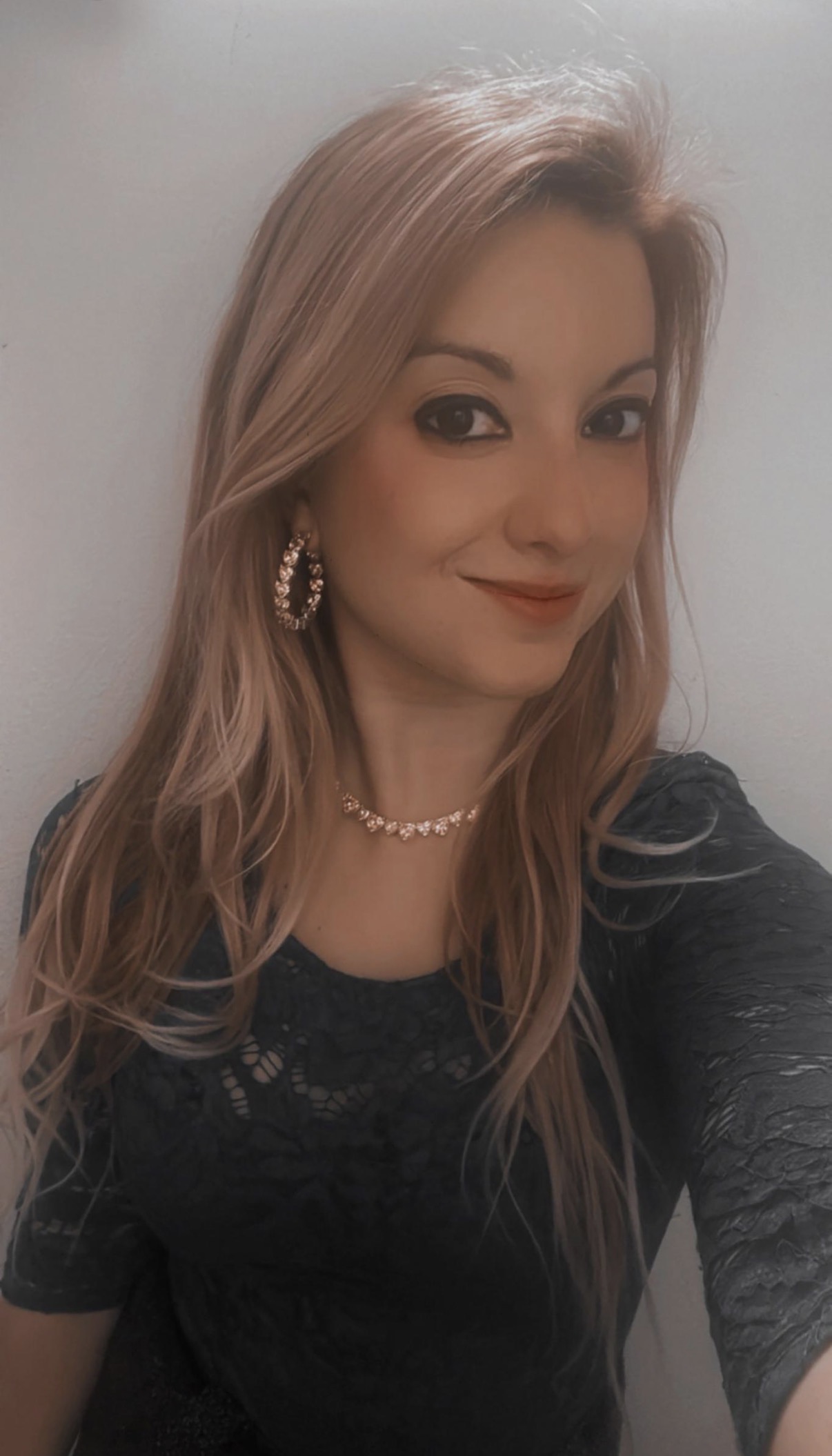
Giulia RAIMONDI
Giulia Raimondi is an archaeologist and lecturer specializing in the study of ancient landscapes and water cults in the Mediterranean world. She holds a PhD in Sciences for Cultural Heritage and Cultural Production from the University of Catania, where she is actively involved in teaching and research in the fields of archaeology and cultural geography. Her academic training has a strong international dimension and included study and research periods at the Freie Universität Berlin and the University of Warsaw. She serves as an adjunct lecturer and conducts university workshops and seminars on archaeology and the enhancement of landscape and territorial heritage. She is qualified to teach Humanities subjects in lower and upper secondary education and to teach Italian literature, classical languages, and Latin in upper secondary schools. Her research focuses on the relationships between space, sacred landscapes, and identity in ancient and modern societies. She has authored numerous publications in international journals and edited volumes. She has participated in and collaborated on several archaeological excavation and survey projects in Italy, at sites including Pompeii, Agrigento, and Ostia, as well as abroad, particularly in Albania, Greece, and Egypt, within projects carried out in collaboration with international universities and research institutions. She is registered in the National Register of Archaeologists of the Italian Ministry of Culture.
Education and Qualifications
• Master’s Degree in Middle East Analysis: Politics, Economics and Security, awarded with highest honours (110/110 cum laude). Completed on 24 June 2025.
• Teaching Qualification (Class A011 – Italian Literature and Latin in Upper Secondary Education) pursuant to Article 13 of the Prime Ministerial Decree of 4 August 2023. Awarded on 14 November 2025.
• Advanced School for Teacher Education (60 CFU Programme), Humanities Subjects in Upper Secondary Education. Completed on 21 December 2024.
• PhD in Sciences for Cultural Heritage and Cultural Production, University of Catania. Dissertation: I santuari delle Ninfe. Il Paesaggio delle acque in Sicilia e la sua storia. Awarded on 22 March 2024.
• Advanced Professional Course: Nuova Didattica per le Lingue: La Metodologia CLIL – Lingua Inglese. Completed on 23 April 2024.
• Postgraduate Specialization Diploma in Archaeological Heritage (Scuola di Specializzazione in Beni Archeologici), University of Catania (Italy). Thesis: Monumenti funerari intra moenia dall’età ellenistica all’età imperiale. Un’analisi preliminare. Awarded on 9 April 2020.
• Teacher Training Programme (24 CFU) in Anthropology, Psychology, Pedagogy, and Teaching Methodologies and Technologies. Certification issued by the University of Catania on 8 January 2019.
• M.A. in Archaeology, University of Catania (Italy), including a Double Master's Programme with the international Archaeology programme at the University of Warsaw (Poland). Thesis: Arule fittili da Mozia: studio iconografico e catalogo degli oggetti analizzati. Awarded with highest honours (110/110 cum laude). Degree awarded on 11 July 2017.
• B.A. in Classical Studies, University of Catania (Italy). Thesis: Riti e cerimonie sacrificali nei contesti storico-archeologici. Ritrovamenti nel mondo mesopotamico e il caso specifico di Umm El-Marra. Awarded with highest honours (110/110 cum laude). Degree awarded on 15 July 2015.
Giulia Raimondi is an archaeologist and researcher specializing in the study of the cultural landscapes of the ancient Mediterranean, with particular attention to the relationships between environment, cult practices, territorial organization, and the construction of cultural identities. Her scholarly work is characterized by an interdisciplinary approach that integrates archaeology, historical geography, the history of religions, landscape analysis, and the study of material culture, with the aim of reconstructing the long-term dynamics of interaction between human communities and their natural and cultural environments.
She obtained her PhD in Sciences for Cultural Heritage and Cultural Production from the University of Catania with a dissertation devoted to the sanctuaries of the Nymphs and the water landscapes of ancient Sicily. Her academic training developed within an international framework through a Double Master's programme with the University of Warsaw and periods of study and research at the Freie Universität Berlin and the Berlin Graduate School of Ancient Studies. These experiences contributed significantly to broadening her methodological and comparative perspectives within Mediterranean studies.
Her principal research interests include the archaeology of water and sacred landscapes, the archaeology of religion and ritual practices, the cults of the Nymphs, processes of spatial sacralization, and the relationships between memory, myth, and territory. These themes are complemented by studies on settlement systems, territorial dynamics, ancient road networks, mobility and communication networks, fortified landscapes, and strategies of spatial control from protohistory to the Classical and Roman periods. A further area of interest concerns processes of cultural contact and interaction across the Mediterranean, with particular attention to the connections between Sicily, Greece, the Adriatic and Balkan regions, Egypt, and the Near East.
Her research also encompasses the study of material culture, ceramics, iconography, and craft production in the ancient world, as well as investigations into funerary contexts, practices of memory, and the construction of local identities. In parallel, she works on issues related to cultural heritage and historical landscapes, examining the role of archaeological and cultural resources in territorial enhancement and sustainable development processes.
A significant component of her research activity concerns the application of archaeological documentation technologies and methodologies to both landscape studies and artefact analysis. Through extensive fieldwork experience, she has developed expertise in archaeological survey, topographic documentation, excavation data management and organization, spatial analysis, database design and management, and the digital recording of archaeological materials. These skills have been applied within numerous national and international research projects, in which she has held positions of responsibility for finds management, archaeological documentation, and the coordination of survey and excavation activities.
She has participated in numerous archaeological research projects and field campaigns in Italy and abroad, working at sites of major scientific importance including Agrigento, Pompeii, Ostia, Gortyn, Motya, Kom Wasit in Egypt, and the international F.L.E.A. Project (Fortified Landscape in Eastern Albania). She is the author of monographs, edited volumes, and numerous scholarly contributions published in national and international journals and collective works, and she actively serves on the editorial boards of academic series and journals dedicated to archaeology, history, and cultural heritage.
Overall, her research is situated within the broader fields of cultural heritage and historical landscape studies, promoting an integrated understanding of the relationships between environment, society, and symbolic systems, and contributing to the study of the processes of cultural transformation that have shaped the Mediterranean from protohistoric times to the contemporary era.
Monographs and Critical Editions
- L.M. Caliò, G.M. Gerogiannis, F. Leoni, G. Raimondi, Agrigento 2. Il Santuario Ellenistico-Romano. Scavi 2013-2017. I Materiali, Rome, 2022. ISBN 978-88-5491-326-4.
- G. Raimondi, I Santuari delle Ninfe. Il paesaggio dell’acqua in Sicilia e la sua storia, PhD Dissertation, University of Catania, 2024.
- G. Raimondi, L’ordine dei Bektashi dall’Impero Ottomano all’epoca Contemporanea. Le attestazioni Bektashi nell’ambito del Progetto F.L.E.A. (Fortified Landscape in Eastern Albania), Bari, 2026. ISBN 979-12-80765-17-8.
Edited Volumes
- L.M. Caliò, G. Lepore, G. Raimondi, S.V. Todaro (eds.), Limnai. Archeologia delle paludi e delle acque interne, Rome, 2022. ISBN 978-88-5491-360-8.
- G. Belfiore, L.M. Caliò, G.M. Gerogiannis, G. Raimondi (eds.), Limnai 2. Archeologia delle acque. Società, infrastrutture e sacro, Rome, 2025.
Journal Articles and Conference Proceedings
- L.M. Caliò, G. Raimondi, forthcoming, Grotte e ninfei della Sicilia antica. Per un’archeologia del sacro e dell’acqua, in Atti del Convegno di studi Le Grotte e L'Uomo: un rapporto di ancestrale memoria per viverci, pregare e morire (Catania–Biancavilla, 2–4 March 2023), forthcoming.
- G. Raimondi, “Hydrothermal Landscapes of Sicily: A Study of Their Mythological and Archaeological Dimensions,” Ann. Geophys., 69, 2026. https://doi.org/10.4401/ag-9509.
- Luigi Caliò, Vittorio Mirto, O. Palio, G. Raimondi, “La viabilità interna e i percorsi istmici in Albania tra l’età del Bronzo e l’età del Ferro,” in Luigi Maria Caliò, Lorenzo Campagna, Helena Catania, Claudia Devoto, Gian Michele Gerogiannis, Orazio Palio, Elisa Chiara Portale (eds.), La Sicilia fra XIV e VII secolo. Network mediterranei e processi culturali, Rome, 2025, pp. [to be specified].
- E. Borgese, C. Devoto, G. Raimondi, “Offerte monetali e culto delle acque. Il caso di Fontana Calda, Butera (CL). Dati preliminari,” in G. Belfiore, L.M. Caliò, G.M. Gerogiannis, G. Raimondi (eds.), Limnai 2. Archeologia delle acque. Società, infrastrutture e sacro, Rome, 2025, pp. 47–59.
- G. Raimondi, D. Musumeci, “Water and Worship: A Preliminary Examination of Cultic Phenomena at Natural Springs in Sicily,” in G. Belfiore, L.M. Caliò, G.M. Gerogiannis, G. Raimondi (eds.), Limnai 2. Archeologia delle acque. Società, infrastrutture e sacro, Rome, 2025, pp. 75–92.
- C. Caruso, F. Fancello, G. Raimondi, R. Riciputo, “Ritualità, memoria e folklore: il culto della terra da Akrai a Palazzolo Acreide,” in Studi Acrensi V (2014–2022), Palazzolo Acreide, 2025, pp. 123–148.
- G. Raimondi, “The Water Landscape in Sicily and its Cults between Classical Sources and Archaeological Sites. Preliminary Analysis,” in B. Kontny, M. Mileszczyk, M. Nowakowska (eds.), Archaeology: Just Add Water, Vol. III, Turnhout, 2025, pp. 27–44.
- D. Di Sabatino, G. Raimondi, “The Caves of the Nymphs. A Diachronic Analysis of the Phenomenon in Greece, Magna Graecia and Sicily,” in CdA 43, Rome, 2024, pp. 161–188.
- A. Danese, G. Raimondi, “Calatabiano, luogo di confine alla ricerca di una identità,” in M.R. Grasso, F. Privitera, I. Torrisi (eds.), Evoluzione storica del paesaggio ionico etneo dall’antichità ai nostri giorni, Viagrande–Catania, 2024, pp. 249–276.
- G. Raimondi, “Pesci sacri e sorgenti divine: riverberi orientali nelle acque siracusane,” in M.G. Cassia (ed.), Uomini e bestie fra Antichità e Medioevo. Animali domestici, selvatici e fantastici, Communitas. Quaderni di filologia, storia e archeologia, Vol. III, Rome, 2024, pp. 43–62.
- G. Raimondi, “Il ruolo della donna e i culti delle acque nel Mediterraneo centrale,” in H. Catania, C. Devoto (eds.), Da Penelope ad Aspasia. Studi sulla figura della donna nella Grecia arcaica. Seminari di archeologia e storia dell’architettura, Rome, 2024, pp. 255–276.
- G. Raimondi, “‘Protinus aerii mellis caelestia dona exsequar’. A Short Overview on Honey in the Past,” in CdA 42, Rome, 2023, pp. 253–270.
- L.M. Caliò, V. Mirto, G. Raimondi, “Some Remarks on the Fortified Landscape of a Border Region: The Case of the Kolonja Plateau (Eastern Albania),” in CronA. Scavi e Ricerche, 3, 2023, pp. 43–60.
- M.T. Magro, F. Ardito, G. Raimondi, A.M. De Luca, “Report preliminare degli scavi archeologici preventivi eseguiti per i lavori di completamento dell’asse viario in contrada Regalsemi di Caltagirone,” in CronA. Scavi e Ricerche, 3, 2023, pp. 19–24.
- Luigi Caliò, G. Raimondi, Vittorio Mirto, Altin Skenderaj, Ardit Ahmetli, “Paesaggio fortificato e vie di comunicazione nella regione di Kolonja tra età del ferro ed ellenismo,” in Reti Adriatiche. Uomini, merci, idee, forthcoming.
- G. Raimondi, “Il miele pharmakon nella pratica medica,” in M.G. Cassia (ed.), L’alimentazione fra passato e presente. Archeologia, storia, filologia, Communitas. Quaderni di filologia, storia e archeologia, Vol. II, Rome, 2023, pp. 219–234.
- L. Piepoli, S. Capurso, M. de Sio, G. Disantarosa, Ma. Foscolo, M. Pellegrino, G. Raimondi, “Indagini topografiche in località Candile (Laterza-TA). Nuovi dati su un contesto pluristratificato ai margini della Murgia Tarantina,” in Il Patrimonio culturale pugliese. Ricerche, applicazioni e best practices. Atti del II congresso Beni Culturali in Puglia, Vol. 1, Bari, 2023, pp. 105–110. ISBN 979-12-210-3581-0.
- L.M. Caliò, G. Lepore, G. Raimondi, S.V. Todaro, “Premessa,” in L.M. Caliò, G. Lepore, G. Raimondi, S.V. Todaro, Limnai. Archeologia delle paludi e delle acque interne, Rome, 2022, pp. 5–8. ISBN 978-88-5491-360-8.
- G. Raimondi, “Le Ninfe del paesaggio lacustre in Sicilia,” in L.M. Caliò, G. Lepore, G. Raimondi, S.V. Todaro, Limnai. Archeologia delle paludi e delle acque interne, Rome, 2022, pp. 115–124. ISBN 978-88-5491-360-8.
- G. Raimondi, “Ceramica da preparazione e da conservazione,” in L.M. Caliò, G.M. Gerogiannis, F. Leoni, G. Raimondi, Agrigento 2. Il Santuario Ellenistico-Romano. Scavi 2013-2017. I Materiali, Rome, 2022, pp. 315–327. ISBN 978-88-5491-326-4.
- G. Raimondi, “Ceramica figurata,” in L.M. Caliò, G.M. Gerogiannis, F. Leoni, G. Raimondi, Agrigento 2. Il Santuario Ellenistico-Romano. Scavi 2013-2017. I Materiali, Rome, 2022, pp. 19–23. ISBN 978-88-5491-326-4.
- G. Raimondi, “Analisi preliminare dei materiali dalle ricognizioni nell’ambito del Progetto ‘Fortified Landscape in Eastern Albania’,” in CronA 40. Scavi e Ricerche, 2021, pp. 55–65.
- G. Raimondi, “La cultura greca a Kom Wasit (Egitto) e l’analisi preliminare dei sarcofagi provenienti dall’area delle Terme Ellenistiche,” in SYN. Synergheion. Rivista Internazionale di Studi Greci. Lingua, Cultura, Società, Vol. 2, Syracuse, 2021, pp. 17–24. ISSN 2612-5129.
- G. Raimondi, R. Riciputo, Review of Luigi M. Caliò – Gian Michele Gerogiannis – Maria Kopsacheili, Fortificazioni e società nel Mediterraneo occidentale. Albania e Grecia Settentrionale, in SYN. Synergheion. Rivista Internazionale di Studi Greci. Lingua, Cultura, Società, Vol. 2, Syracuse, 2021, pp. 45–47. ISSN 2612-5129.
- Concetta Caruso, Anna Maria De Luca, Giuliana Garagozzo, Giulia Raimondi, Roberta Riciputo, Review of Luigi M. Caliò – Gian Michele Gerogiannis – Maria Kopsacheili, Fortificazioni e società nel Mediterraneo occidentale. Sicilia e Italia, in SYN. Synergheion. Rivista Internazionale di Studi Greci. Lingua, Cultura, Società, Vol. 2, Syracuse, 2021, pp. 48–50. ISSN 2612-5129.
- G. Raimondi, “I luoghi della cultura in Israele e nei Territori Palestinesi,” in Identità, Cultura e Sviluppo Sostenibile. Popolazioni, Territori e Paesaggi in Terra Santa, M. Sorbello (ed.), Rome, 2021, pp. 131–158. ISBN 979-12-5994-473-3.
- C. Caruso, G. Raimondi, R. Riciputo, “Akrai: dall’età arcaica all’età ellenistica. Il culto degli eroi e la memoria di una comunità,” in Atti del Convegno ‘Σχήματα - La città oltre la forma’ (Syracuse, 26–28 February 2020), Rome, 2022, pp. 211–221.
- G. Raimondi, “Monumenti Funerari Intra Moenia dall’età Ellenistica all’età Imperiale. Un’analisi Preliminare,” in Cronache di Archeologia 39, 2020, pp. 246–272. ISSN 2532-8484.
- L.M. Caliò, G. Raimondi, “Tombe ‘eccellenti’ e infrastrutture urbane. Problemi di topografia funeraria,” in G. Lepore, B. Muka (eds.), L’archeologia della morte in Illiria ed Epiro. Contesti, ritualità e immagini tra Età Ellenistica e Romana. Proceedings of the International Conference, Tirana, 16–18 December 2019, Academy of Sciences, Rome, 2020, pp. 89–114. ISBN 978-88-5491-122-2; EISBN 978-88-5491-117-8.
- A. Morrone, D. Piombino Mascali, M. Randazzo, G. Raimondi, L. Maniscalco, “Children in Roof Tiles: A Case Study from Medieval Paternò (Sicily),” in Medicina Historica, 5(1), 2021: e2021006.
- G. Raimondi, “Arulae di terracotta dalla Collezione Whitaker e annotazioni sulla trasversalità culturale nella Sicilia Occidentale,” in Cronache di Archeologia 38, 2019, pp. 143–160. ISSN 2532-8484; e-ISSN 2612-0941.
- G. Raimondi, Review of Luigi Maria Caliò, Valentina Caminneci, Monica Livadiotti, Maria Concetta Parello and Maria Serena Rizzo (eds.), Agrigento. Nuove ricerche sull’area pubblica centrale, Rome, Edizioni Quasar, 2017, 178 pp., in Siculorum Gymnasium. A Journal for the Humanities, IV (2018), pp. 531–534. ISSN 2499-667X.
- G. Raimondi, “Arule in terracotta dalla piccola isola siciliana di Mozia,” in AD REM 4, 2019, pp. 18–23. ISSN 1899-0495.
- M. Privitera, G. Raimondi, T. Nicolosi, “Documentation in Underwater Archaeology: Ancient Harbour and Techniques. Two Case Studies from Sicily: the Kothon of Motya and the Ancient Port of Catania,” in AD REM 4, 2019, pp. 24–35. ISSN 1899-0495.
- M. Privitera, G. Raimondi, T. Nicolosi, “The Documentation in Underwater Archaeology: The Ancient Harbours and the Techniques. The Case of the Kothon in Mothya and the Ancient Port of Catania, Sicily,” Book of Abstracts, in AD REM 1–4, 2016, p. 23. ISSN 1899-0495.
Research Profile
Research activities in the field of Mediterranean archaeology focus on the study of the relationships between landscape, cult practices, territorial organization, and the construction of cultural identities. The methodological approach is interdisciplinary, integrating archaeological evidence, literary sources, historical geography, the history of religions, and landscape analysis, with particular attention to the processes of interaction between human communities and their environment.
One of the main research areas concerns the archaeology of water and sacred landscapes, with a particular focus on ancient Sicily and the central Mediterranean. These studies examine the role of springs, rivers, lakes, wetlands, and caves as structuring elements of religious landscapes, exploring processes of spatial sacralization, forms of worship associated with water resources, and their long-term development. Within this framework, special attention is devoted to the cults of the Nymphs, phenomena of ritual continuity, and the relationships between memory, myth, and territory. A further area of investigation concerns the archaeology of religion and ritual practices in the ancient world. Research addresses sanctuaries, religious manifestations, and forms of devotion attested in Greece, Magna Graecia, and Sicily, with the aim of understanding the role of cultic phenomena in the construction of local identities and processes of cultural integration. Particular emphasis is placed on female cults, water-related ritual practices, votive traditions, and the interactions between the religious traditions of the eastern and western Mediterranean. Another significant field of research focuses on archaeological landscapes and settlement dynamics through the analysis of mobility networks, territorial infrastructures, defensive systems, and strategies of spatial control. These studies adopt a long-term perspective, spanning from prehistory and protohistory to the Roman period, with particular attention to Sicily, Greece, the Adriatic region, and the Balkans. Within this context, research explores ancient communication routes, fortified landscapes, and the relationships between natural environments and settlement organization. Additional research interests concern the relationships between cultural heritage, territory, and the enhancement of historical and archaeological resources. These studies investigate the ways in which tangible and intangible heritage contribute to the construction of territorial identities and sustainable development processes, with particular attention to cultural routes, the protection of historic landscapes, and historical geography.
Research activities also include studies on the material culture of the ancient world, iconography, and craft production, as well as investigations into funerary contexts, practices of memory, and phenomena of cultural interaction across the Mediterranean. Particular attention is devoted to the circulation of models, ideas, and traditions between Sicily, Egypt, the Near East, Greece, and the Adriatic region, with the aim of reconstructing the networks of connectivity that characterized the ancient world. Taken together, these research activities contribute to the broader fields of cultural heritage and historical landscape studies, promoting an integrated understanding of the relationships between environment, society, and symbolic systems, and enhancing our knowledge of the cultural transformations that shaped the Mediterranean from protohistoric times to the modern era.
Editorial Boards and Scientific Committees
- Member of the Scientific Committee of Seminari di archeologia e storia dell’architettura (Directors: A. Fino and G. Gerogiannis).
- Member of the Editorial Board of the series Atlante. Natura, Cultura e Territorio, Pontecorboli Editore, Florence (Director: S. Cannizzaro).
- Member of the Editorial Board of Convegni di Archeologia Siciliana (Directors: L.M. Caliò, E.C. Portale, and L. Campagna).
- Member of the Editorial Board of Communitas. Quaderni di filologia, storia e archeologia (Director: M.G. Cassia).
- Member of the Editorial Board of Monografie di Communitas (Director: M.G. Cassia).
- Member of the Editorial Board of Cronache di Archeologia (Directors: M. Frasca and L.M. Caliò).
- Member of the Editorial Board of Cronache di Archeologia – Monografie (Directors: M. Frasca and L.M. Caliò).
- Member of the Editorial Board of Cronache – Scavi e Ricerche (Director: S.V. Todaro).
- Member of the Editorial Board of Antico (Director: L.M. Caliò).
- Member of the Editorial Board of the series Studi Agrigentini (Directors: G. Lepore and L.M. Caliò).
Excavation and Archaeological Survey Experience
• 2012 – Palikè (Rocchicella, Mineo, Sicily): Excavation and field laboratory. Exploring Ancient Sicily at Palikè. Florida Atlantic University (Prof. B.E. McConnell; Dr L. Maniscalco).
• 2013 – Valcorrente (Belpasso, Catania, Sicily): Prehistoric settlement. Excavation and field laboratory. University of Catania (Prof. O. Palio, Prof. S.V. Todaro, Dr M. Turco).
• 2014 – La Reitana (Catania, Sicily): Water sanctuary. Excavation and field laboratory. University of Catania (Prof. E. Tortorici, Dr M.T. Magro).
• 2014 – Roman Necropolis of Calatabiano (Catania, Sicily). Excavation and field laboratory. University of Catania (Prof. E. Tortorici, Dr M.T. Magro).
• 2014 – Roman Hypogeum “Quadrato”, Via San Filippo (Catania, Sicily). Excavation and field laboratory. University of Catania (Dr F. Nicoletti, Dr F. Buscemi).
• 2015 – Kom Al-Ahmer/Kom Wasit (Egypt): Occupation contexts between the Late Pharaonic and Hellenistic periods. Excavation, finds processing laboratory, and artefact database management. University of Padua (Prof. Michele Asolati and Prof. M. Kenawi).
• 2015 – Medieval Cemetery of “Le Mura”, Jesolo (Venice): Summer School in Paleopathology. Ca’ Foscari University of Venice (Prof. S. Gelichi, Prof. F. Bertoldi).
• 2016 – Kom Al-Ahmer/Kom Wasit (Egypt): Commercial district and storage facilities of the ancient city. Excavation, finds processing laboratory, and artefact database management. University of Padua (Prof. Michele Asolati and Prof. M. Kenawi).
• 2016 – Motya (Sicily): Northern Fortifications. Excavation and field laboratory. Sapienza University of Rome (Prof. L. Nigro).
• 2017 – Motya (Sicily): Study of artefacts from the Whitaker excavations. Sapienza University of Rome (Prof. L. Nigro).
• 2017 – Kom Al-Ahmer/Kom Wasit (Egypt): Hellenistic Bath Complex. Artefact study and analysis. University of Padua (Prof. Michele Asolati and Prof. M. Kenawi).
• February–October 2017 – Agrigento (Sicily): Hellenistic-Roman Temple. Artefact study and analysis. University of Catania and the Parco Archeologico e Paesaggistico Valle dei Templi di Agrigento (Prof. L.M. Caliò).
• 2018 – Internship at the Archaeological Superintendence of Catania (Tutor: Dr M. Ursino).
• June–July 2018 – Agrigento (Sicily): Hellenistic-Roman Temple. Artefact study and analysis. University of Catania and the Parco Archeologico e Paesaggistico Valle dei Templi di Agrigento (Prof. L.M. Caliò).
• 2018 – Gortyn (Crete): Praetorium. Excavation and field laboratory. University of Catania (Prof. L.M. Caliò).
• September–October 2018 – Agrigento (Sicily): Hellenistic-Roman Temple. Co-director responsible for finds management. University of Catania and the Parco Archeologico e Paesaggistico Valle dei Templi di Agrigento (Prof. L.M. Caliò).
• June–July 2019 – Agrigento (Sicily): Hellenistic-Roman Temple. Co-director responsible for finds management. University of Catania and the Parco Archeologico e Paesaggistico Valle dei Templi di Agrigento (Prof. L.M. Caliò).
• 2019 – Gortyn (Crete): Praetorium. Excavation and field laboratory. University of Catania (Prof. L.M. Caliò).
• 2020 – Agrigento (Sicily): Ancient Theatre and Hellenistic-Roman Temple. Co-director responsible for finds management. University of Catania and the Parco Archeologico e Paesaggistico Valle dei Templi di Agrigento (Prof. L.M. Caliò).
• 2020 – Caltagirone (Sicily): Preventive archaeology project. Area supervisor and coordinator of finds and database management. Archaeological Superintendence of Catania, Cooperativa Archeologia, and ANAS (Dr M.T. Magro, Dr N. Cinelli, Arch. Di Luciano; with Dr Francesco Ardito).
• May–July 2021 – Agrigento (Sicily): Ancient Theatre. Excavation area supervisor. University of Catania and the Parco Archeologico e Paesaggistico Valle dei Templi di Agrigento (Prof. L.M. Caliò).
• July 2021 – Pompeii (Italy): Forum Area, sector in front of the Capitolium. Co-director responsible for finds management. Archaeological Park of Pompeii and University of Catania (Director Gabriel Zuchtriegel; Prof. L.M. Caliò).
• August–September 2021 – Albania Survey: F.L.E.A. PROJECT (Fortified Landscape in Eastern Albania). Co-director of field survey operations. University of Catania and the Institute of Archaeology of Tirana (Prof. L.M. Caliò and Prof. Altin Skenderaj).
• May–June 2022 – Agrigento (Sicily): Ancient Theatre. Excavation area supervisor. University of Catania and the Parco Archeologico e Paesaggistico Valle dei Templi di Agrigento (Prof. L.M. Caliò).
• July 2022 – Pompeii (Italy): Forum Area, sector in front of the Capitolium. Co-director responsible for finds management. Archaeological Park of Pompeii and University of Catania (Director Gabriel Zuchtriegel; Prof. L.M. Caliò).
• July 2022 – Tripi (Italy): Survey of Ancient Abakainon. Co-director of field survey operations. University of Catania (Prof. L.M. Caliò).
• July 2022 – Ostia (Italy): Forum of Porta Marina and the area adjacent to the Piazzale delle Corporazioni. Excavation and field laboratory. Archaeological Park of Ostia Antica and University of Catania (Director Alessandro D’Alessio; Prof. L.M. Caliò).
• October 2022 – Albania Survey: F.L.E.A. PROJECT (Fortified Landscape in Eastern Albania). Finds supervisor. University of Catania and the Institute of Archaeology of Tirana (Prof. L.M. Caliò and Prof. Altin Skenderaj).
• May 2023 – Albania Survey: F.L.E.A. PROJECT (Fortified Landscape in Eastern Albania). Finds supervisor. University of Catania and the Institute of Archaeology of Tirana (Prof. L.M. Caliò and Prof. Altin Skenderaj).
• June 2023 – Agrigento (Sicily): Ancient Theatre. Artefact documentation and recording. University of Catania and the Parco Archeologico e Paesaggistico Valle dei Templi di Agrigento (Prof. L.M. Caliò).
• September 2023 – Pompeii (Italy): Forum Area, sector in front of the Capitolium. Co-director responsible for finds management. Archaeological Park of Pompeii and University of Catania (Director Gabriel Zuchtriegel; Prof. L.M. Caliò).
• October 2023 – Albania Survey: F.L.E.A. PROJECT (Fortified Landscape in Eastern Albania). Co-director of field survey operations. University of Catania and the Institute of Archaeology of Tirana (Prof. L.M. Caliò and Prof. Altin Skenderaj).
• July 2024 – Ostia (Italy): Forum of Porta Marina and the area adjacent to the Piazzale delle Corporazioni. Excavation and field laboratory. Archaeological Park of Ostia Antica and University of Catania (Director Alessandro D’Alessio; Prof. L.M. Caliò).
• July 2025 – Ostia (Italy): Forum of Porta Marina and the area adjacent to the Piazzale delle Corporazioni. Excavation and field laboratory. Archaeological Park of Ostia Antica and University of Catania (Director Alessandro D’Alessio; Prof. L.M. Caliò).
• August–September 2025 – Epirus (Greece): Archaeological survey in the Acheron Valley and excavation at the site of Sistrouni. Co-director of the finds processing laboratory within the project Archaeological Research in the Upper Part of the Acheron Valley (Varvara N. Papadopoulou, Archaeological Service of Ioannina; Eleni Vasiliou; Vasiliki Giannakis; Athina Zogaki; Ioulia Katsadima; Giorgos Kyrkos; Polyxeni Pappa; University of Catania: Luigi Maria Caliò and Gian Michele Gerogiannis; Polytechnic University of Bari: Antonello Fino).